

Curriculum
Primary years education
Junior school that builds strong
roots for big dreams
Learning model
Learning That Connects International Board to the Real World: Fifth Gear Field Model
Every term, children take what they learn each week and design something with real-world impact.
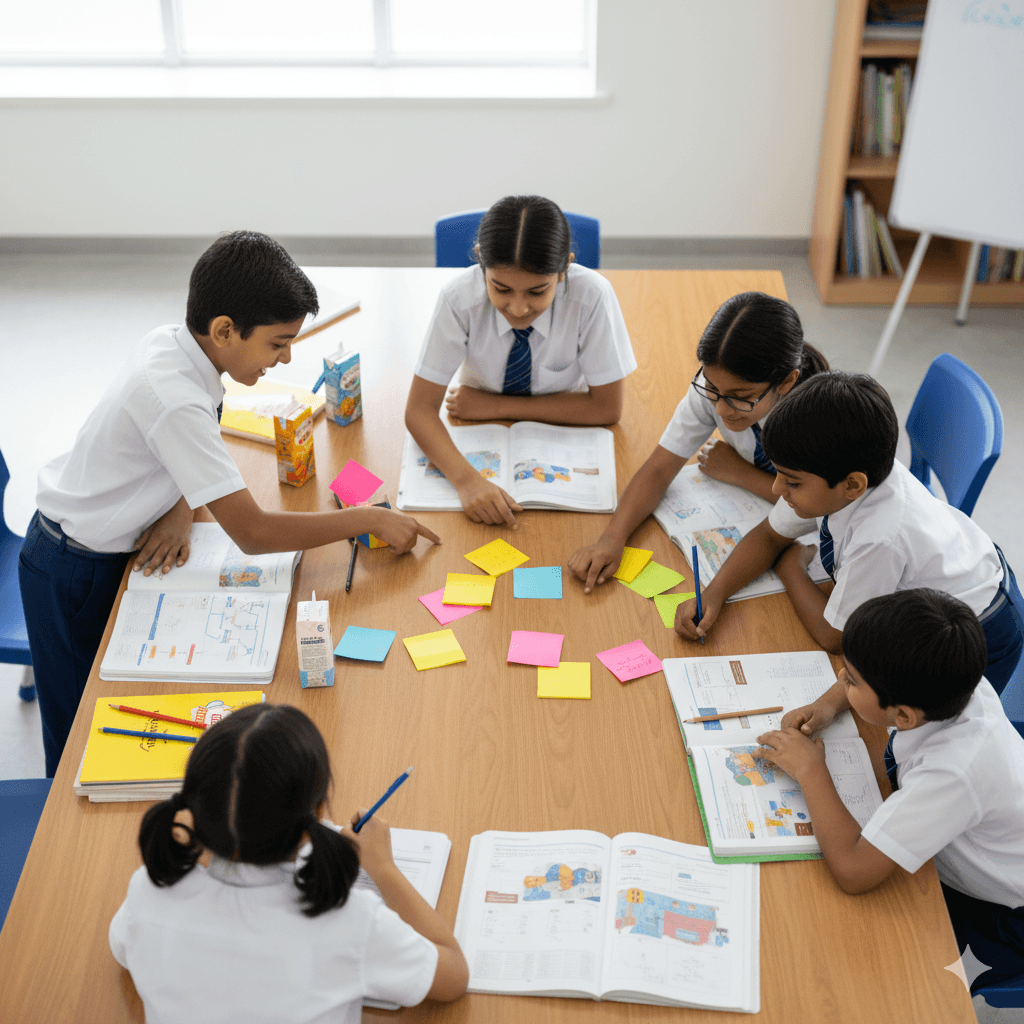
Foundational learning follows the PYP framework; where big transdisciplinary themes guide teaching and children build core ATL skills like thinking, research, communication, and self-management.
Foundational learning follows the PYP framework; where big transdisciplinary themes guide teaching and children build core ATL skills like thinking, research, communication, and self-management.
A dedicated learning day to drive semester projects forward through expert mentorship, field trips, peer collaboration, and hands-on work
A dedicated learning day to drive semester projects forward through expert mentorship, field trips, peer collaboration, and hands-on work
A dedicated learning day to drive semester projects forward through expert mentorship, field trips, peer collaboration, and hands-on work
Field projects
Grade 1-2
Sample field courses to help explore SOVO's model

The People Map Project
What if your neighborhood was more than just streets and buildings, but a living storybook?
Children turn into curious community explorers, setting out to map not just places-but people. From the friendly chaiwala to the quiet librarian, they connect with locals across generations to uncover real-life stories, hidden talents, and shared values. Back in school, they bring these encounters to life through photo exhibitions, mini-documentaries, audio interviews, and hand-drawn maps, transforming simple conversations into powerful storytelling. With the help of storytellers and sociologists, students begin to understand how empathy, diversity, and connection shape the world around them.
The People Map Project
What if your neighborhood was more than just streets and buildings, but a living storybook?
Children turn into curious community explorers, setting out to map not just places-but people. From the friendly chaiwala to the quiet librarian, they connect with locals across generations to uncover real-life stories, hidden talents, and shared values. Back in school, they bring these encounters to life through photo exhibitions, mini-documentaries, audio interviews, and hand-drawn maps, transforming simple conversations into powerful storytelling. With the help of storytellers and sociologists, students begin to understand how empathy, diversity, and connection shape the world around them.
The Future Pizza Challenge
Why do we eat chicken Pizza but not cat Pizza?
Students dive into the history of food choices, exploring why some animals and plants make it onto our plates while others don't. Through farm and zoo visits, they trace the journey of ingredients, from field to food chain, unpacking cultural, ethical, and ecological reasons behind what we eat. The challenge ends in the kitchen, where they craft their own pizza, analyzing its origins, nutrition, and impact with guidance from chefs and food scientists.
The Future Pizza Challenge
Why do we eat chicken Pizza but not cat Pizza?
Students dive into the history of food choices, exploring why some animals and plants make it onto our plates while others don't. Through farm and zoo visits, they trace the journey of ingredients, from field to food chain, unpacking cultural, ethical, and ecological reasons behind what we eat. The challenge ends in the kitchen, where they craft their own pizza, analyzing its origins, nutrition, and impact with guidance from chefs and food scientists.
Young Hustlers Market Day
Can a 7-year-old turn ideas into income?
Students become pint-sized entrepreneurs, transforming everyday objects into creative products, think hand-painted magnets, mini journals, or eco pots. They design, price, and pitch their goods at a lively school "Hustle Hub," complete with signs, stalls, and customer tokens. With hands-on help from real vendors and family mentors, they learn the real-world magic of earning through effort, storytelling, and smart choices, walking away not just with tokens, but with a spark of business confidence.
Young Hustlers Market Day
Can a 7-year-old turn ideas into income?
Students become pint-sized entrepreneurs, transforming everyday objects into creative products, think hand-painted magnets, mini journals, or eco pots. They design, price, and pitch their goods at a lively school "Hustle Hub," complete with signs, stalls, and customer tokens. With hands-on help from real vendors and family mentors, they learn the real-world magic of earning through effort, storytelling, and smart choices, walking away not just with tokens, but with a spark of business confidence.
Nature's Tiny Inventors
Can ants, spiders, and beetles help us solve tomorrow's problems?
Students take a deep dive into how small creatures tackle big challenges, like building, flying, sticking, or surviving. Through detailed sketches, models, and close observation, they uncover the secrets behind nature's smartest designs. Partnering with wildlife experts and innovation mentors, they reimagine these ideas into kid-led creations, from wearable tech to better backpacks, proving that sometimes, the biggest breakthroughs come in the tiniest packages.
Nature's Tiny Inventors
Can ants, spiders, and beetles help us solve tomorrow's problems?
Students take a deep dive into how small creatures tackle big challenges, like building, flying, sticking, or surviving. Through detailed sketches, models, and close observation, they uncover the secrets behind nature's smartest designs. Partnering with wildlife experts and innovation mentors, they reimagine these ideas into kid-led creations, from wearable tech to better backpacks, proving that sometimes, the biggest breakthroughs come in the tiniest packages.
Field projects
Grade 3-4
Sample field courses to help explore SOVO's model
The Chandigarh Millet Kitchen
Can traditional grains be the food of the future?
Students step into the kitchen to explore millets, India's ancient superfood as sustainable, healthy alternatives to fast food. They learn to read labels, study food systems, and connect with local farmers or nutritionists. Each team reimagines one millet-based dish (like a ragi pizza or bajra wrap) and prepares a recipe video + poster campaign for a "Millet Food Fest."
Subjects covered
Science, economics, language
The Chandigarh Millet Kitchen
Can traditional grains be the food of the future?
Students step into the kitchen to explore millets, India's ancient superfood as sustainable, healthy alternatives to fast food. They learn to read labels, study food systems, and connect with local farmers or nutritionists. Each team reimagines one millet-based dish (like a ragi pizza or bajra wrap) and prepares a recipe video + poster campaign for a "Millet Food Fest."
Subjects covered
Science, economics, language
Design a Dream Eco-Home
Can a home be both beautiful and kind to the planet?
Students design their own environment friendly homes for modern Indian families. They explore insulation, renewable energy, space efficiency, and materials, visiting local construction sites or architecture studios. With help from green architects and civil engineers, they create scaled 3D models and blueprints, applying design thinking to real-world living.
Subjects covered
Math, environmental science, design & technology, art
Design a Dream Eco-Home
Can a home be both beautiful and kind to the planet?
Students design their own environment friendly homes for modern Indian families. They explore insulation, renewable energy, space efficiency, and materials, visiting local construction sites or architecture studios. With help from green architects and civil engineers, they create scaled 3D models and blueprints, applying design thinking to real-world living.
Subjects covered
Math, environmental science, design & technology, art
Reimagining Public Spaces
What makes a park inviting or a marketplace chaotic?
Students step into the shoes of urban planners, exploring how public spaces shape daily life and how they can be improved. Working in teams, they measure spaces, study architecture, and the research community needs to propose meaningful enhancements. With guidance from architects and urban planners, they apply math, science, and design thinking to transform neglected areas into vibrant, functional spaces, bringing their vision to life through models and actual transformations.
Reimagining Public Spaces
What makes a park inviting or a marketplace chaotic?
Students step into the shoes of urban planners, exploring how public spaces shape daily life and how they can be improved. Working in teams, they measure spaces, study architecture, and the research community needs to propose meaningful enhancements. With guidance from architects and urban planners, they apply math, science, and design thinking to transform neglected areas into vibrant, functional spaces, bringing their vision to life through models and actual transformations.
Walk the Talk: Designing Identity
How can a sneaker tell your story?
Students dive into identity, fairness, and self-expression turning big ideas into bold designs. Their challenge: transform a plain white sneaker into a reflection of their own life, values, and culture. With hands-on guidance from fashion designers and visual artists, they sketch, prototype, and present their creations in a runway showcase, celebrating individuality through design.
Walk the Talk: Designing Identity
How can a sneaker tell your story?
Students dive into identity, fairness, and self-expression turning big ideas into bold designs. Their challenge: transform a plain white sneaker into a reflection of their own life, values, and culture. With hands-on guidance from fashion designers and visual artists, they sketch, prototype, and present their creations in a runway showcase, celebrating individuality through design.
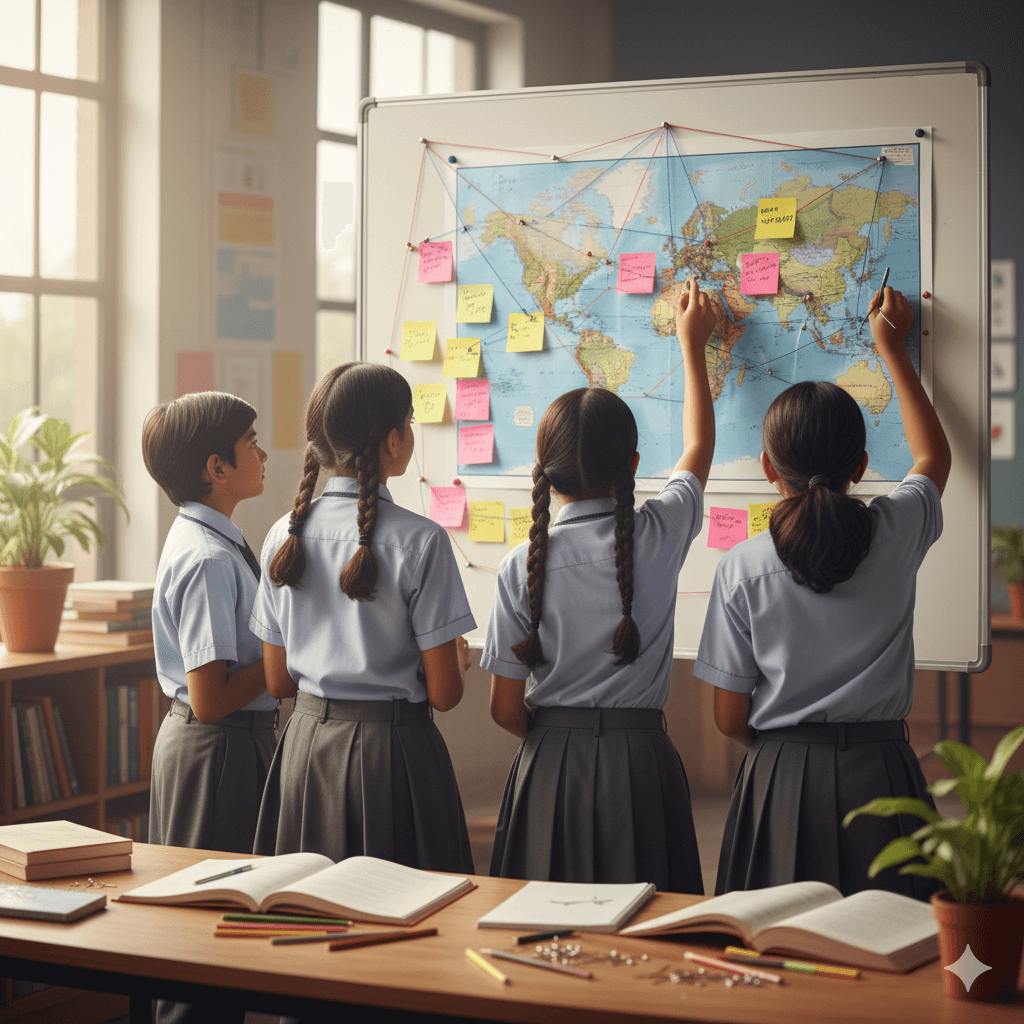
Primary years
Guided by expert educators
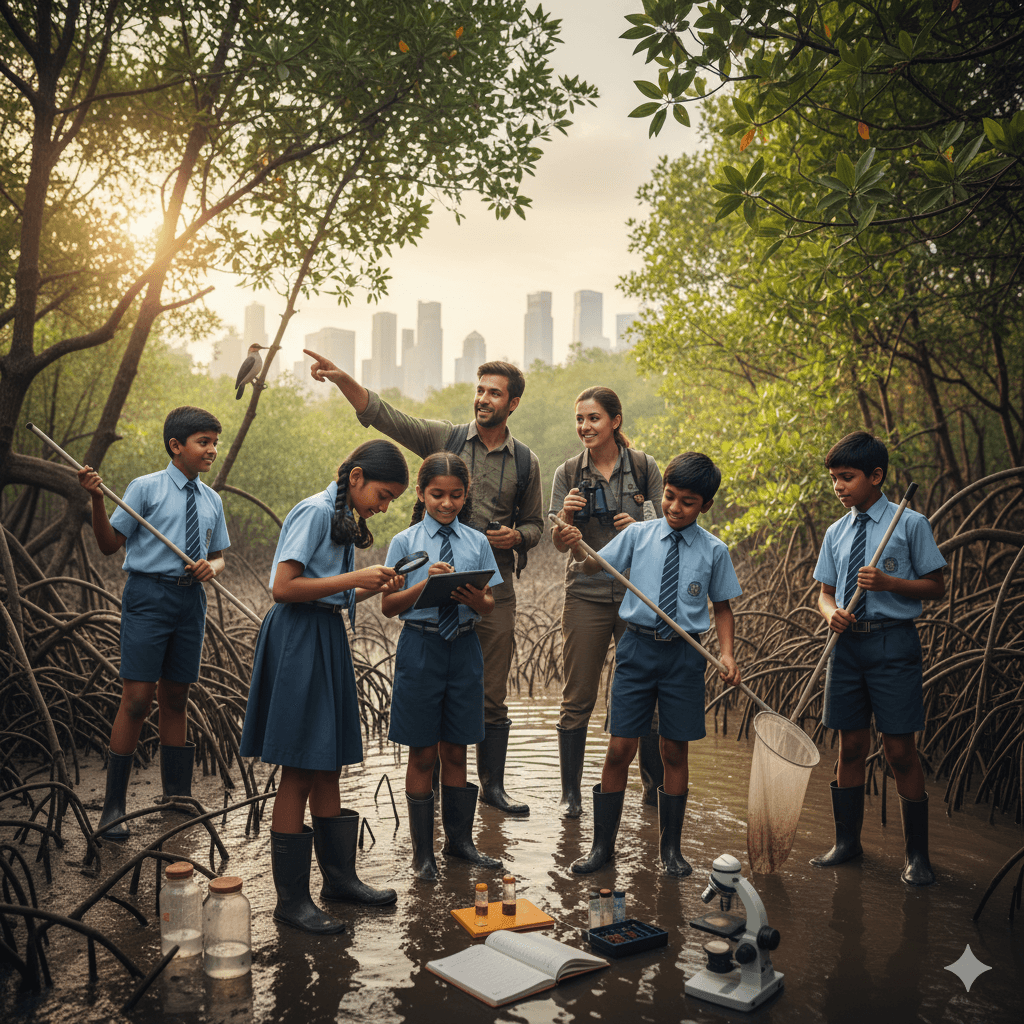
With a 1:10 teacher-student ratio, every child is seen, heard, and supported by experienced educators who know them deeply

Children engage with real-world mentors who offer hands-on expertise and guidance across industries and disciplines.

Our Care Team offers academic, emotional, and social support to help every child grow with purpose and confidence.
Our Care Team offers academic, emotional, and social support to help every child grow with purpose and confidence.
FAQ
Your questions, answered!
01
What is the eligibility criteria for admission to your school?

02
Is there a school transport service available?
03
How is my child's progress communicated to me throughout the year?
04
What is the typical class size and teacher to student ratio in junior school?
Join the revolution of
better education
Ensure your kids a better future
Join the revolution of
better education
Ensure your kids a better future
Join the revolution of
better education
Ensure your kids a better future